Fireworks in November
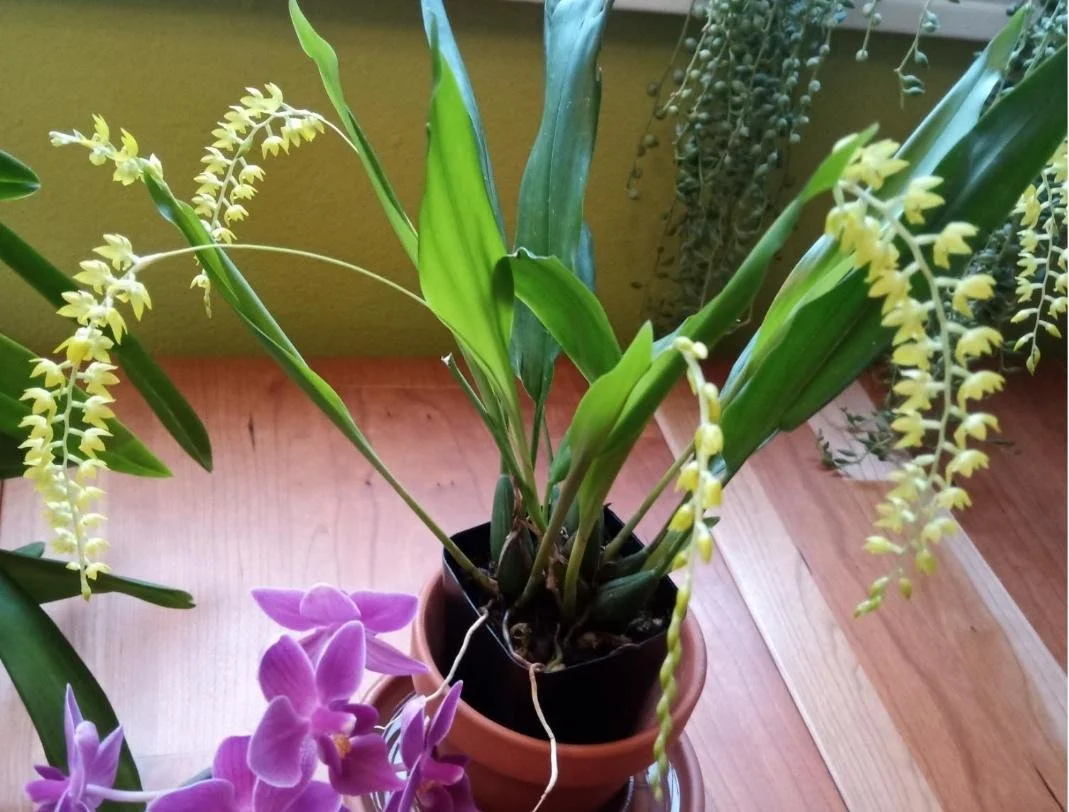
Dendrochilum formanosa (and a cameo from my phalaenopsis on the left)
Once again, the Massachusetts Orchid Show was transportive. Spending a couple hours exploring the alien world that takes over a Winchester banquet hall is one of my favorite things to do every fall. November is a great month for orchid blooms, given that the cold nighttime temperatures and the bigger gap between day and nighttime temperatures induce flowering for many species.
Dendrochilum is an orchid genus comprised of 313 species, all of which come from Southeast Asia, particularly the Philippines, Taiwan, Sumatra, and Borneo. They live mostly in high-altitude forests, soaking up both the warmth and the humidity of their environment. The one I got is a Dendrochilum formanosum (also known as Coelogyne uncata for those keeping track).
The genus was first catalogued by a European botanist in 1825, and its name derives from the Greek “dendron,” which means tree, and “cheilos,” which means lip. Given the growth pattern of dendrochilums, it’s not hard to figure out the reason behind the name.
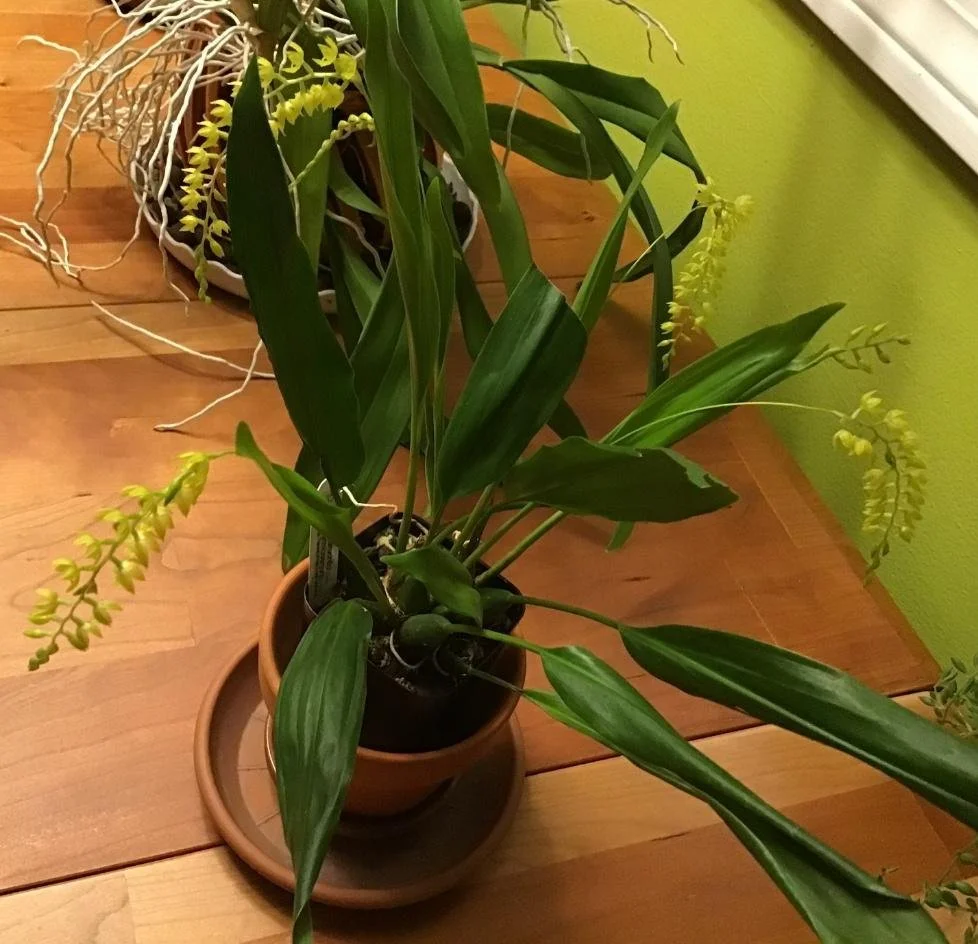
One flower spike is never enough for these overachievers!
One of the reasons this orchid stuck out to me is because its growth is so distinctly different from that of all the other orchids I own. Phalaenopsis, oncidium, cattleyas, and other more common orchids have such different spike formations and flowers. Dendrochilum spikes are extremely thin and fragile, so much so that they can’t grow upright because they can’t support the weight of the flowers. Luckily, these thin stems are flexible, and once they grow beyond the sheath of the leaf, they bend downward, giving the blooms a cascading, firework-like appearance.
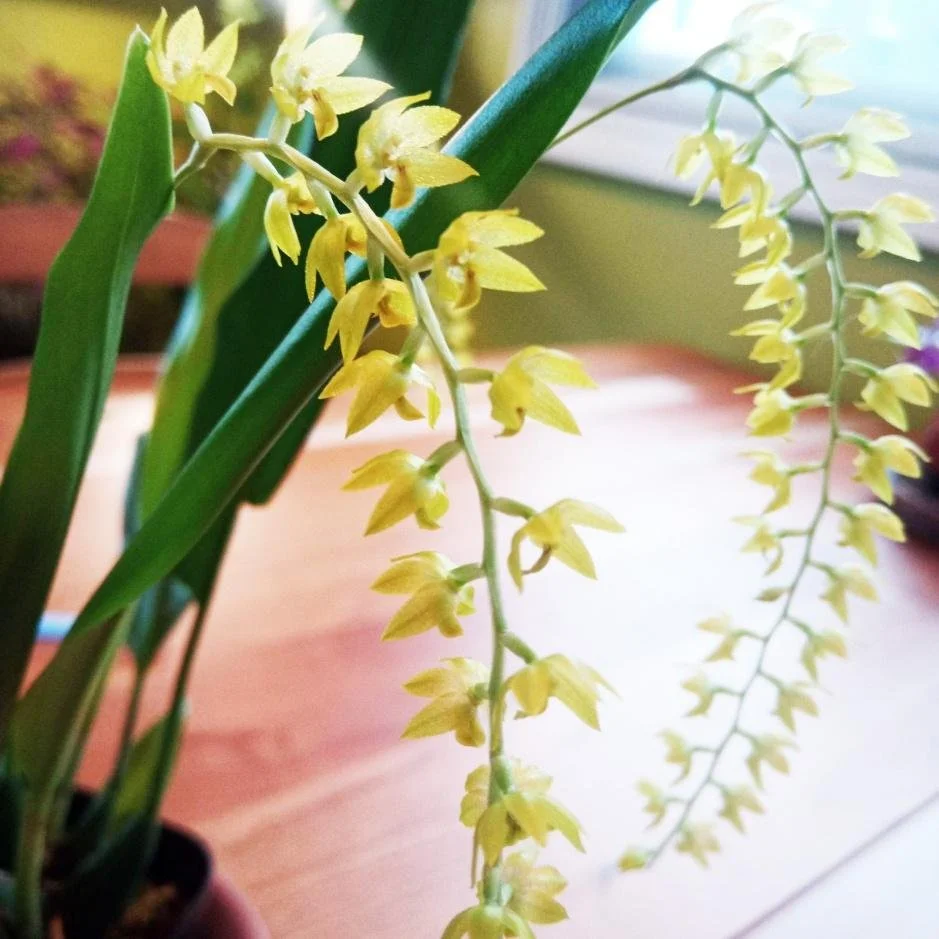
I usually dislike fireworks, but I’m all about these!
Dendrochilums tend to be small, which is helpful if you happen to have an orchid problem. Because the star-shaped blooms themselves are so tiny, they don’t last as long as phalaenopsis blooms, which sometimes hang around for months. But the good news is that if cared for properly, dendrochilum can bloom multiple times a year from several spikes that can be up to 20 inches long (mine has six spikes right now). And if you get your face right in one of those blooms, you might detect a sweet fragrance.
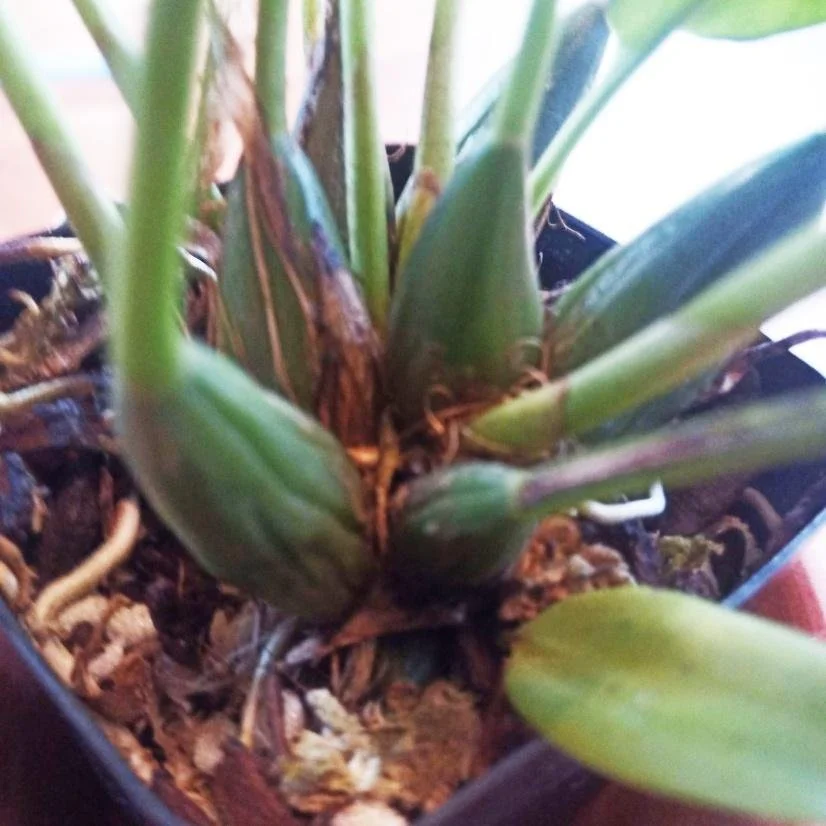
Dendrochilum pseudobulbs and potting medium
I’ve only owned this one for a few weeks, so I can hardly claim to be an expert in its care. But from what I’ve read and what the folks at J&L Orchids, the shop I bought this from, told me, they’re relatively easy to care for. They require more water than phalaenopsis and other thicker-root orchids. They do have small pseudobulbs that retain water, but they also like a consistently humid environment. Mine is still in the nursery pot I bought it in, since you don’t want to repot while a plant is in bloom, but when I do repot it, I’ll mix some sphagnum moss in with the orchid bark for a little extra humidity retention. I’ll keep it in my greenhouse under LEDs, and I’ll also probably water this one twice a week. We’ll see how long it takes to get the next round of fireworks going.